
Patient-centered Workflows
Designing Clinical Decision Support within Enterprise Healthcare Constraints
Context
Walgreens was overhauling the behind-the-counter pharmacy software used by pharmacists and technicians across 8,600+ U.S. locations. The strategic shift: move from task-based workflows — process prescriptions, clear queues, check boxes — to patient-centered experiences that surface clinical insights and support safer decision-making.
I joined the UX team mid-project as the sole senior designer on a three-person feature team, working alongside a clinical pharmacist and a business analyst.
Problem
Pharmacy software has zero margin for error. The users — pharmacists and pharmacy technicians working under significant time pressure — are making clinical decisions that directly affect patient safety. A confusing interface isn't just a usability problem. It's a patient safety risk.
The design challenge wasn't visual. It was architectural: reorient an entire enterprise system around patient context rather than transactional task completion, without disrupting the workflows of users already learning a new platform.
Approach
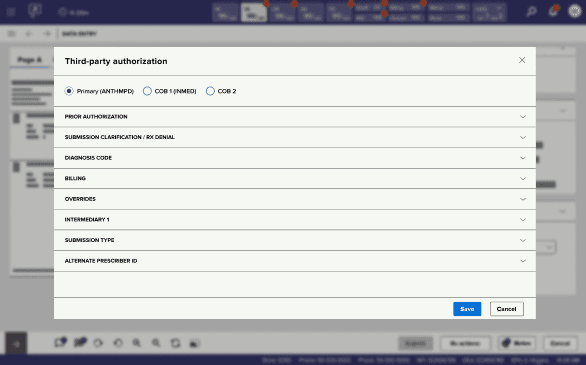
The core information architecture shift: surface patient context first, tasks second. Who is this prescription for, what are their risks, what does the pharmacist need to know before acting — these answers had to be immediately visible at every clinical decision point.
Working within an established enterprise design system meant discipline over creativity. Every decision had to balance three constraints simultaneously: clinical accuracy (validated with the pharmacy SME), regulatory compliance, and consistency with existing interaction patterns to minimize adoption barriers for users mid-transition.
I ramped from 1–2 concurrent features to 2–4 within my first two months by rapidly synthesizing existing documentation and Figma libraries — then moved fast without sacrificing the rigor a healthcare environment demands.
Solution
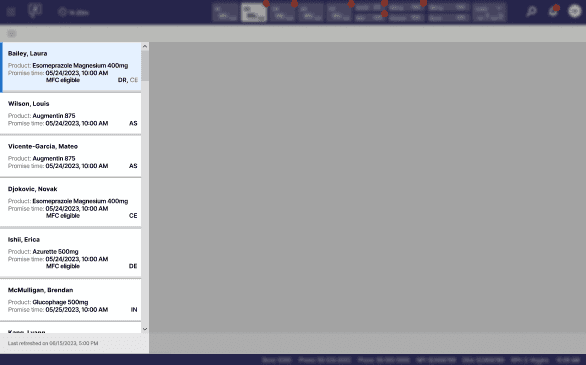
Designed production-ready user flows for multiple features within the platform, including new use cases that had no existing design precedent within the system.
Every deliverable included fully annotated Figma files with interaction states, edge cases, and step-by-step flows — plus Confluence documentation for cross-functional alignment. In healthcare software, thorough handoff documentation isn't optional. It's a patient safety requirement.
New component patterns and updated legacy flows were documented directly into the UX style guide, contributing to the design system used across the broader team.
Impact
The role was eliminated in November 2023 as part of a company-wide reduction affecting approximately 250 corporate employees — before the platform shipped. The work I contributed remained part of the active design system and handoff documentation for the team that continued.
What this engagement demonstrated: the ability to operate at speed and rigor inside one of the most constrained design environments there is — enterprise healthcare software, established design system, regulatory requirements, and clinical stakes — and deliver production-ready work without a greenfield runway.
© 2026