
Scaled Down, Not Dumbed Down
Designing Lab-Scale Pharmaceutical Technology for Scientists, Not Operators
Context
IMA Life is a global leader in pharmaceutical freeze-drying technology. Their flagship LYnfinity system — used at industrial scale to spray-freeze-dry medications into microspheres for vaccines and drug delivery — represented a significant leap in continuous aseptic manufacturing. The challenge: scale it down.
The LYnfinity Lab was designed to bring that same technology into pharmaceutical research environments, giving graduate and PhD-level scientists a way to rapidly iterate and test formulations at lab scale before committing to full industrial production. IMA had the technology. TEAMS designed everything else — the physical housing, the user experience, and the software interface — as one unified system.
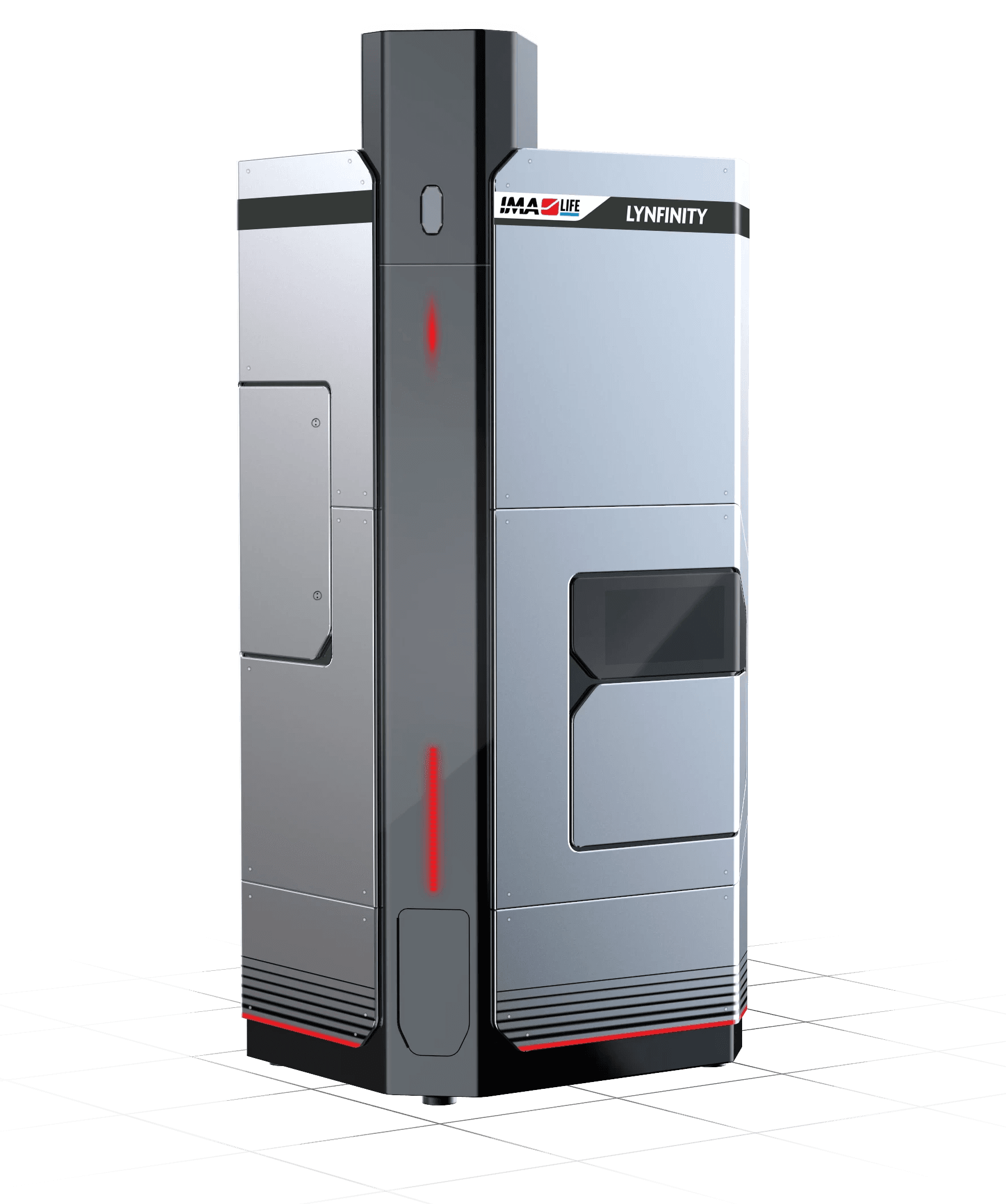
physical machine is 10 feet tall, with key interaction points throughout.
Problem
IMA's existing software was built for industrial operators: experienced technicians running large-scale production batches on rooms-length machinery, interacting with dense parameter-heavy interfaces daily. The LYnfinity Lab's users were an entirely different profile — graduate students and post-doctoral researchers working in pharmaceutical labs, often encountering spray-freeze-drying technology for the first time.
The machine itself was already a significant presence: approximately 10–12 feet tall, with a relatively compact 4×4 foot footprint. The software had to match that presence — technically rigorous enough to support genuine pharmaceutical research, but approachable enough that a first-year PhD student could confidently run a batch without a manual in hand.
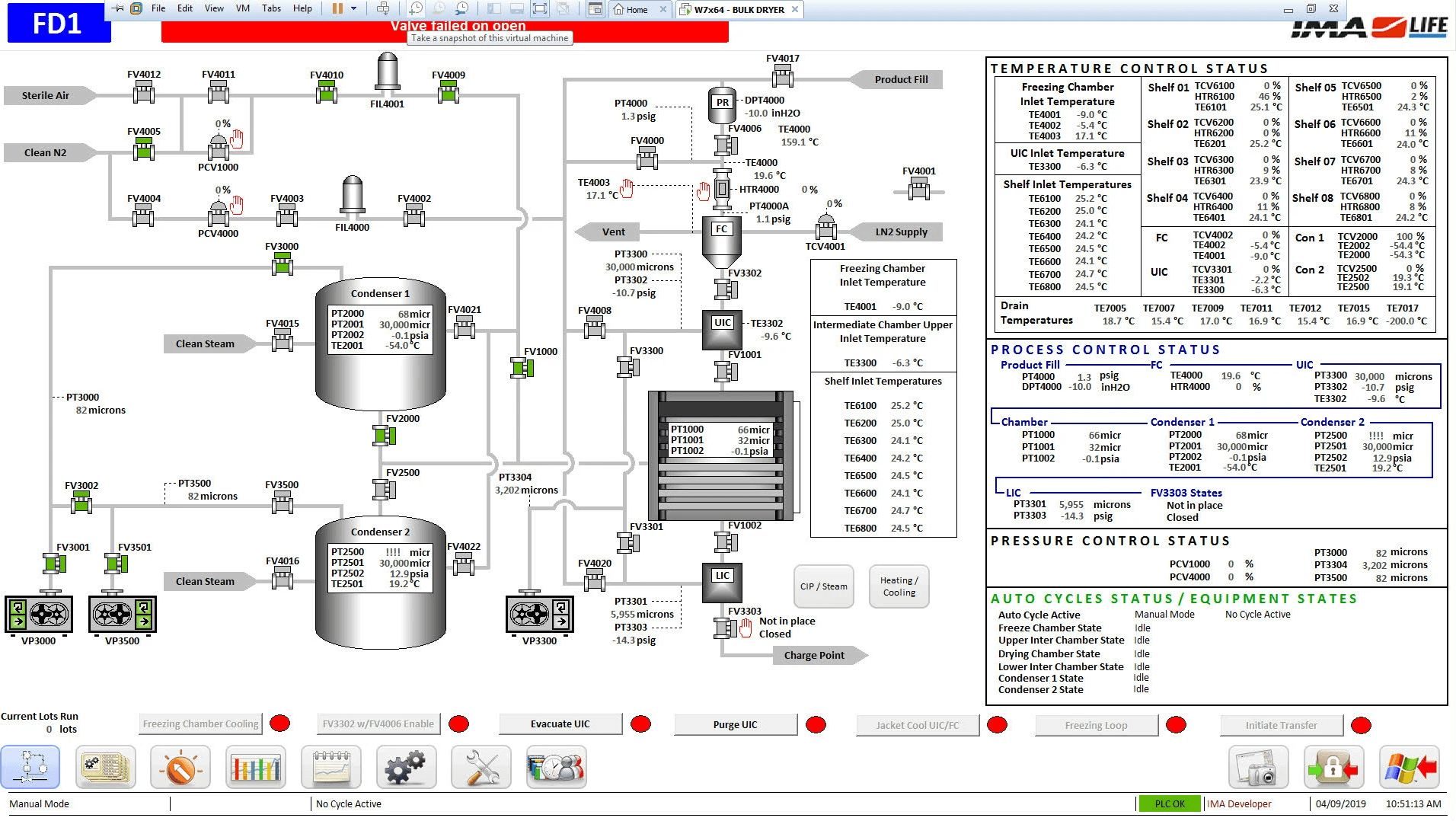
Before: a very technical, engineered approach for production.
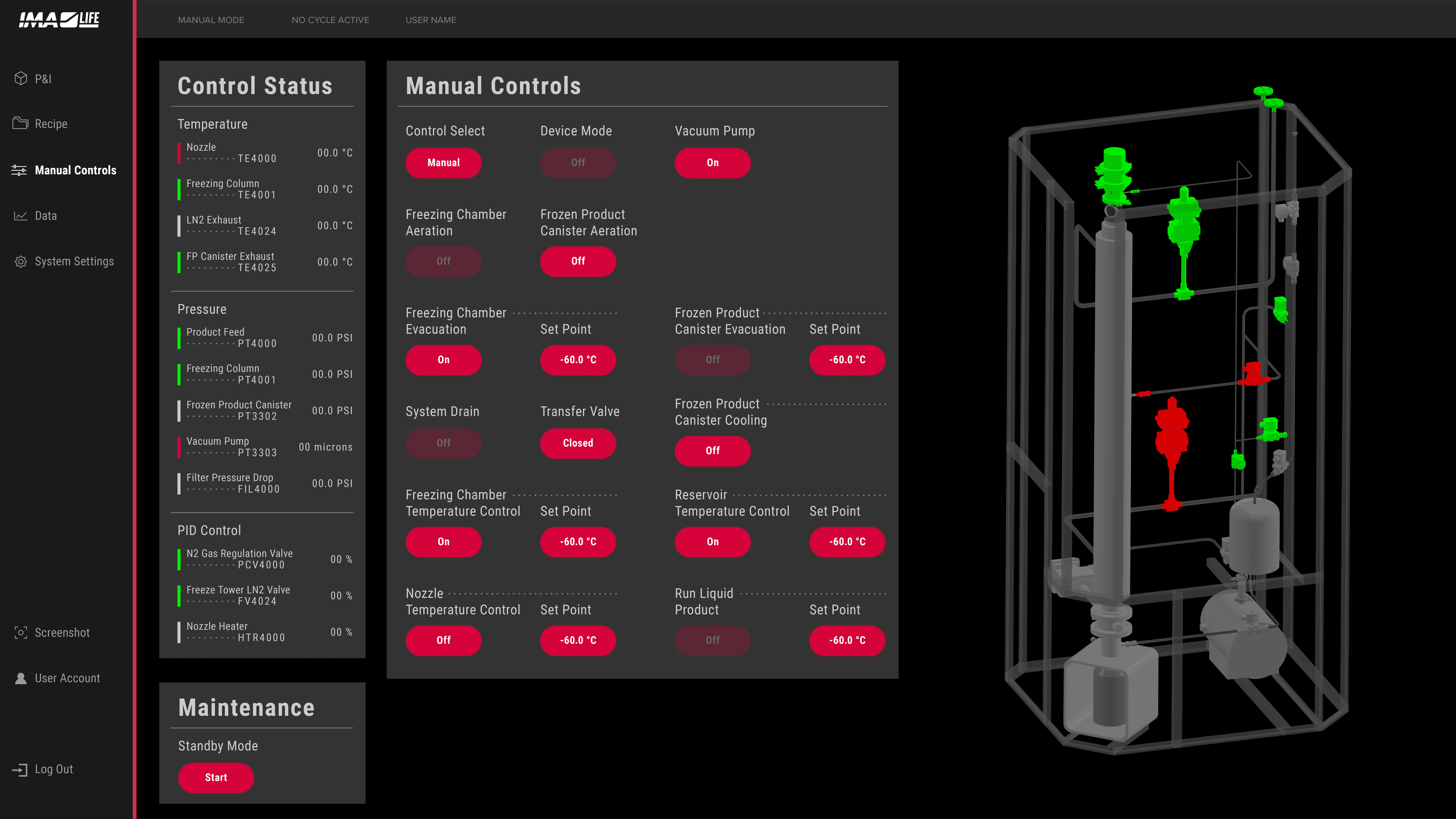
After: a visual approach, streamlined and simplified.
Approach
I was the sole UI designer on the project, collaborating closely with senior industrial designer Ross on both the UX strategy and the physical-digital integration. The goal from the start was a unified system — not a machine with software bolted on, but a single cohesive product where the interface felt like it belonged to the hardware.
Discovery through physical prototyping. Before any screen design began, the team built a full-scale foamcore mockup of the LYnfinity Lab — all 10 feet of it — which lived next to my desk for the better part of six months. Covered in sticky notes and sketch iterations, it was our primary tool for testing user paths, validating screen placement, and working through how a lab technician would physically move around and interact with the machine. We considered tilting the screen toward the user for better ergonomics; the mockup let us evaluate that decision in real space, at real scale, against average human height, before committing anything to hardware.
Dark mode as a functional decision. The interface is dark — deep charcoal backgrounds, white text, IMA Life's red used deliberately for callouts and critical actions. This wasn't an aesthetic choice. Lab environments have variable lighting, screens mounted into tall equipment get viewed from multiple angles, and the users — often caffeine-fueled researchers deep into a testing session — needed a display that wouldn't contribute to eye strain during critical parameter adjustments. A legibility failure at the wrong moment isn't a UX annoyance. It's a wasted batch.
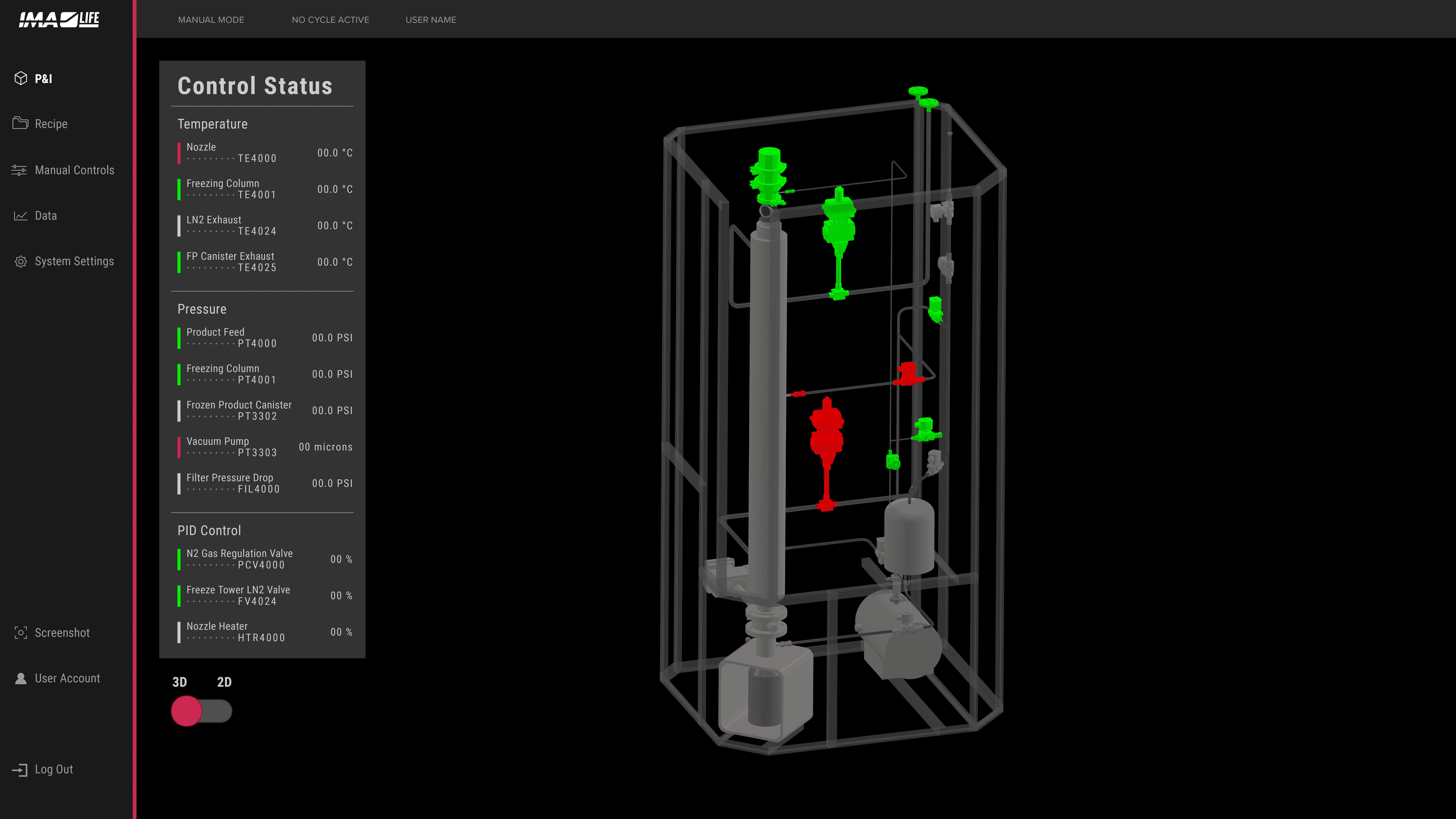
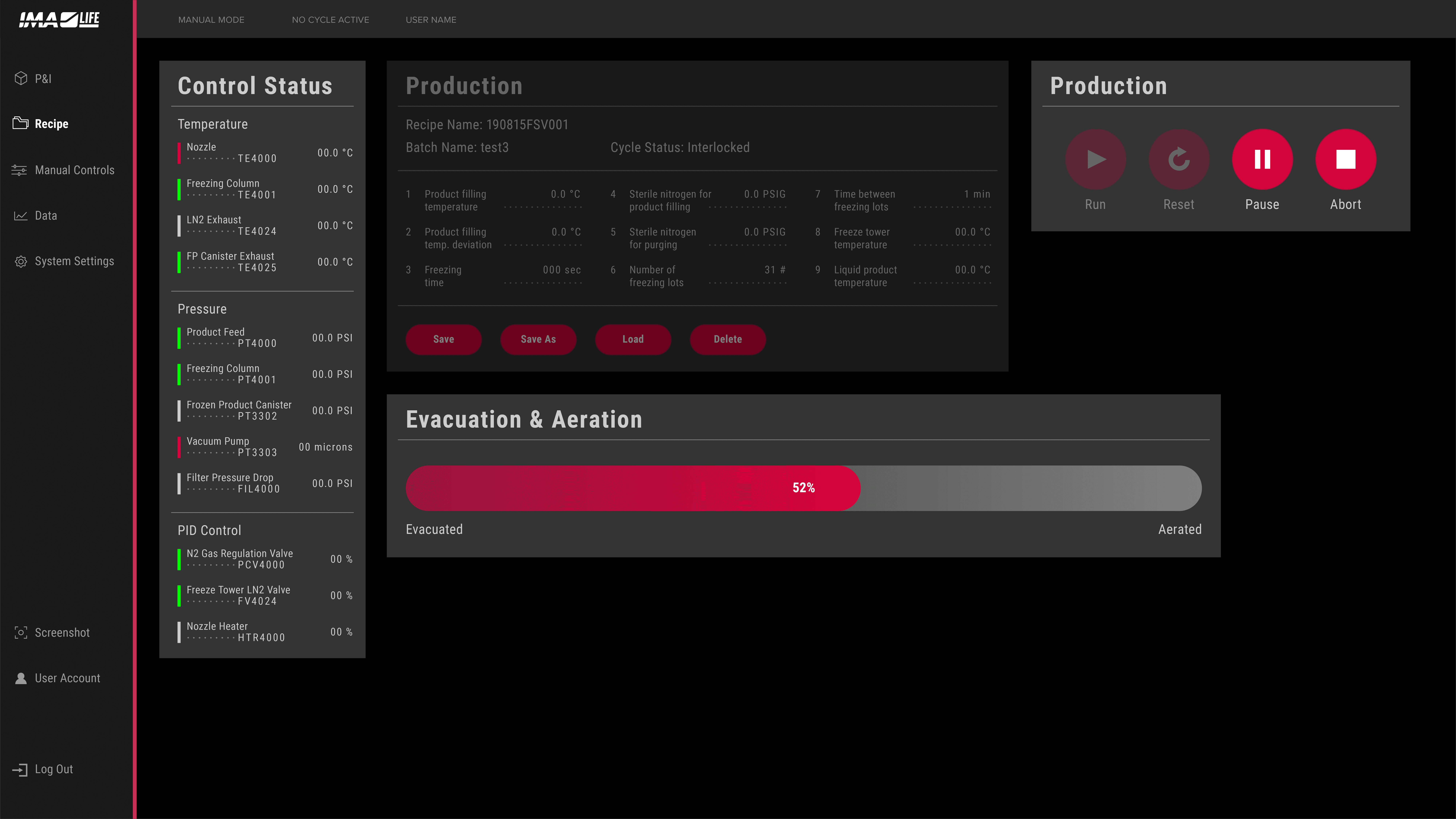
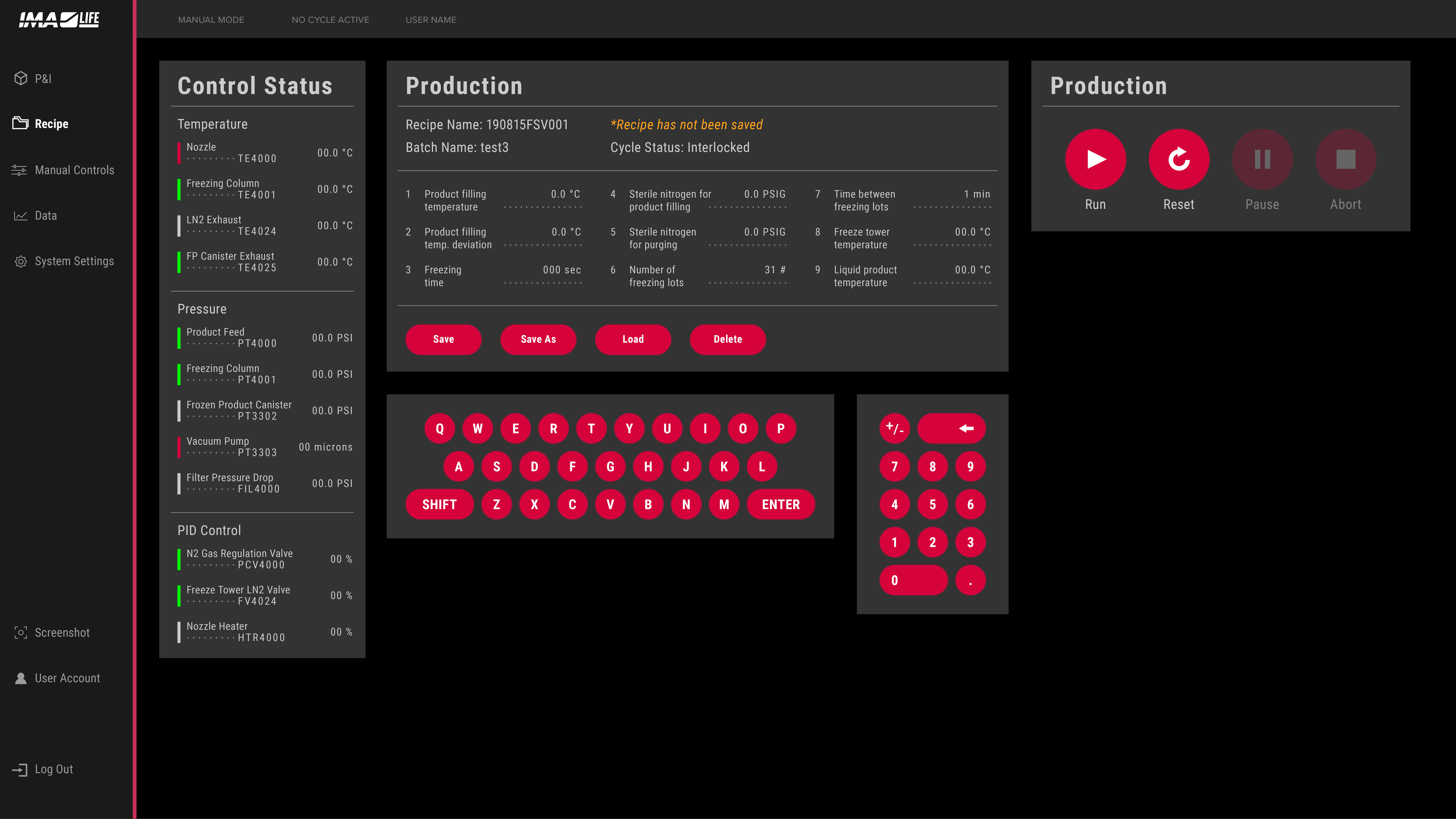
Preset-forward workflow architecture. The core "Start New Batch" flow was designed around the reality of lab research: scientists run variations on the same formulation repeatedly, making incremental adjustments to find optimal parameters. The recipe/parameter screen allows users to load presets from prior batches and make targeted modifications — rather than rebuilding from scratch each time. This mirrors actual research behavior and reduces both cognitive load and the risk of parameter entry errors.
Solution
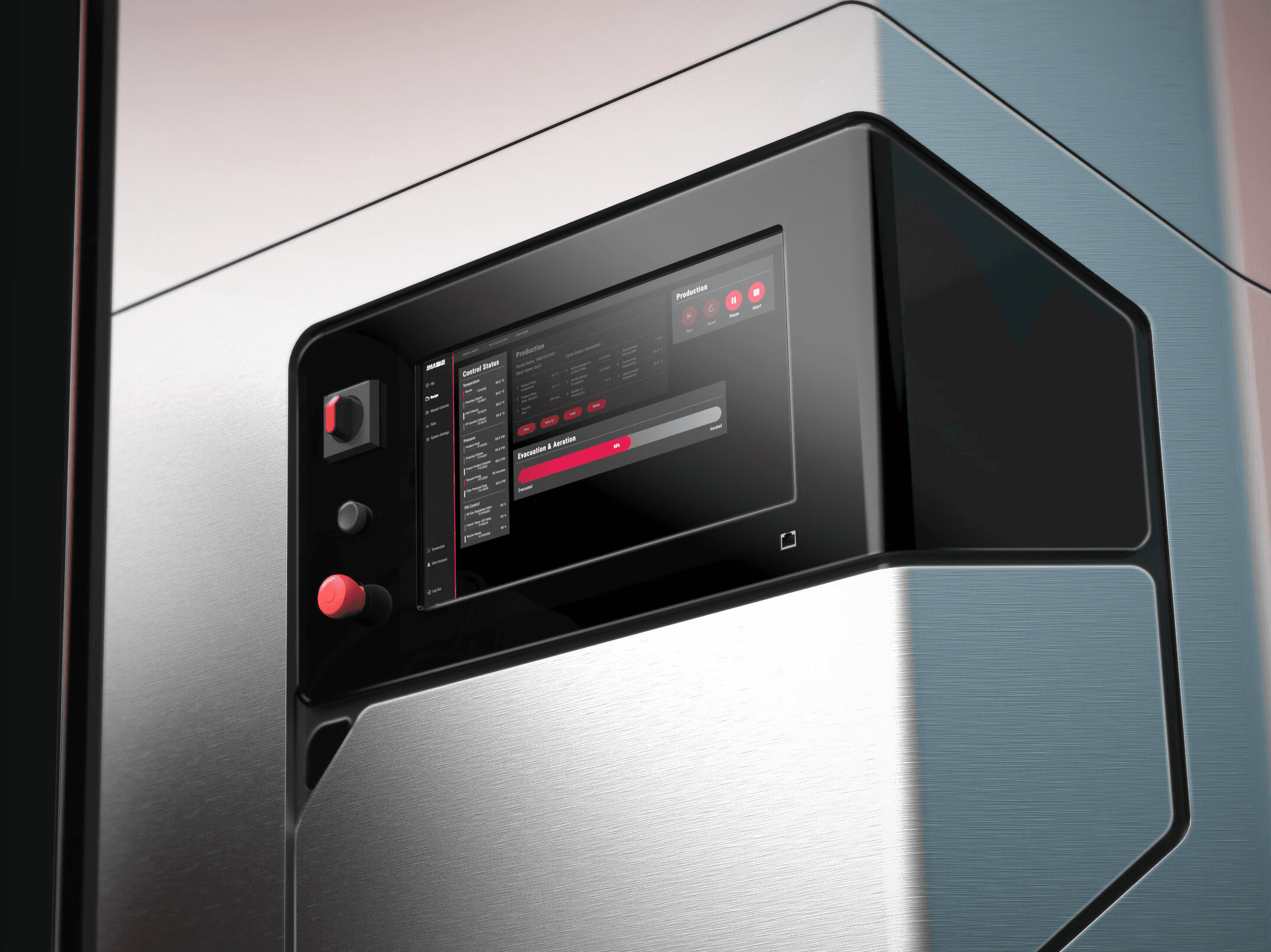
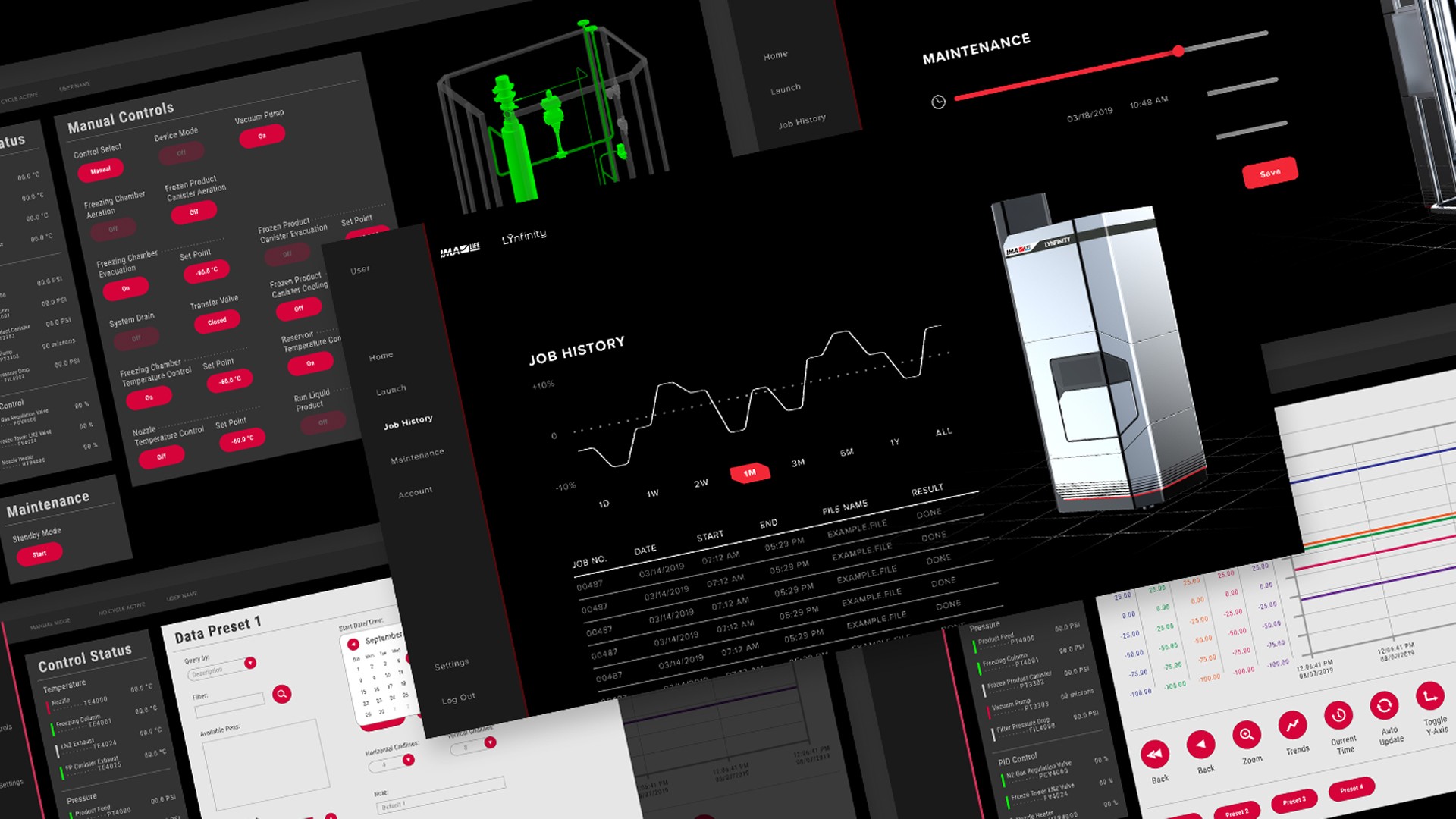
A dark-mode touchscreen interface, mounted directly into the LYnfinity Lab's physical housing, designed as a unified visual system with the hardware it controls.
Core workflows centered on the batch run cycle — starting a new batch, loading and adjusting saved recipes, monitoring active runs, and reviewing results. Parameter screens surfaced the controls researchers needed without exposing the full complexity of the underlying industrial system. The interface guided users through critical steps sequentially, reducing the chance of out-of-order operations that could compromise a batch.
Impact
The LYnfinity Lab launched to significant industry recognition. It won the Best Technologies Innovation award at INTERPHEX — one of the pharmaceutical industry's most competitive trade exhibitions — validating both the technology and the product's market readiness.
The product is actively in use at IMA Life's Lab4Life facility in Tonawanda, NY, a state-of-the-art lyophilization process development laboratory serving pharmaceutical clients worldwide. Research labs can now iterate on formulations at lab scale with the same continuous spray-freeze-drying process used in full industrial production — compressing the path from development to scale-up.
Best Technologies Innovation Award
— INTERPHEX, NYC 2022
© 2026